Brain Health
Brain health is a hot topic today – and rightly so!
While everyone focuses on other aspects of health, they often forget just how vital brain health is. It’s important to exercise and eat right in order to keep the body healthy, but being in good health doesn’t just mean physically, it includes mental and cognitive health.
Look at these 14 fascinating “brain facts”.
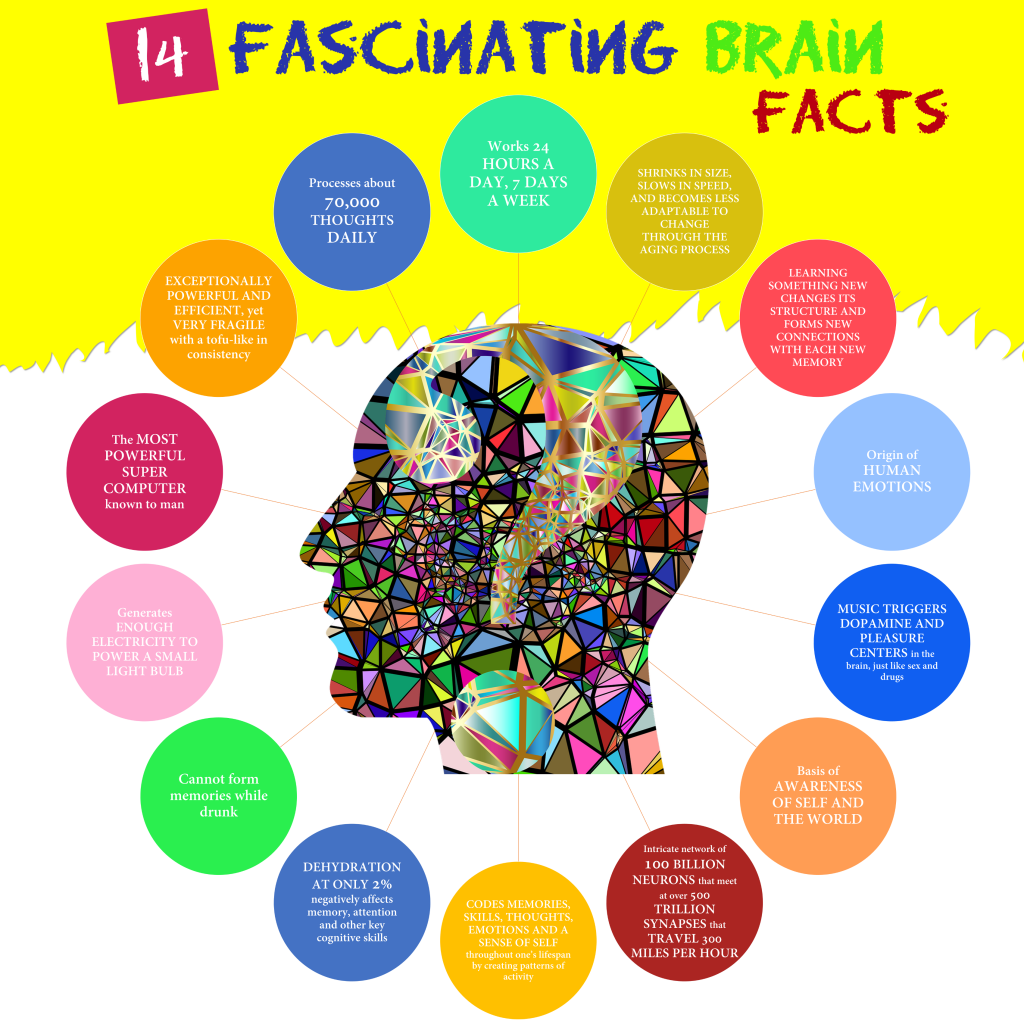
You don’t necessarily need to make major changes in your lifestyle, if you’re already eating well and exercising regularly, you’re on the right path.
Your brain loses elasticity as you age, which makes it more difficult for the brain to make the required connections. This often results in difficulty focusing, recalling memories, and an inability to focus and pay attention.
You can prevent this from happening, by keeping your brain healthy. A healthy brain will retain its elasticity, allowing you to continue learning and retaining memories well into your senior years, that is, provided you treat it right.
Your mental health is just as vital to your overall health and wellbeing as your physical healthy is. Just because your school (or work) days are over, doesn’t mean there’s nothing left to learn.
Your brain will change and shift throughout your life, and you can control how change occurs. There are plenty of ways to maintain your brain’s ultimate health, and unlock your potential.
A primary Question
One of the primary questions to ask when thinking about brain health is this…
What Are the Signs of Mental Fatigue?
Mental fatigue occurs when the brain is overstimulated, or through a lack of sleep and/or suffering from chronic mental stress.

If a person is mentally stressed they may find it hard to get to sleep and/or stay asleep, or alternatively, stressed individuals may require more sleep than usual. Healthy sleep is crucial for physical and mental health, so
recognizing the signs of mental fatigue is important.
Here are some of the signs to watch out for:
1. Memory Retention Problems
If you are lacking sleep your brain may become much less capable of retaining information. It may be retaining some, but not all. It just isn’t as effective as if you were getting quality sleep. Therefore, if you are having problems recalling or retaining vital information, you may be showing signs of mental fatigue.
2. Brain Feels Foggy
Think of your computer for a moment. If you have too much going on, everything slows down or freezes. It needs to shut down and have a restart. It’s as if your computer has mental fatigue.
The same applies to you. If there’s too much going on your brain has to deal with the overload and may begin to feel foggy. If you are showing signs of brain fog, it’s time to shut down, take a sleep and recognize this sign of mental fatigue.
3. Easily or Often Confused
People suffering from mental fatigue become easily confused especially when bombarded with an overload of information. They tend to struggle with coping with all the sensory inputs being sent to the brain. An example of being confused through mental fatigue, is the need to have someone repeat themselves, even though you heard perfectly. You just didn’t take it in. Your mind was elsewhere and not focusing on the task at hand.
4. No Longer Feeling Motivated
If you are mentally fatigued the last thing you will feel is motivated. If you are battling to get out of bed to want to start your day then mental fatigue is hitting you hard. No motivation is a big warning sign!
5. Highly Emotional
If you are feeling irritable, anxious, sad, and just not in the mood to do anything, you are quite possibly showing signs of mental fatigue. Out of control emotions are a sure sign something is up, whether it be stress hormones kicking in or mental fatigue. Either way, it’s time to calm down and relax.
6. Change in Eating Behaviors
Mental fatigue may drive a person to indulge in and crave sugary or salty foods, whilst others may suffer a loss of appetite. Eating too much (especially of these poorer food types) or too little is not good for you. These negative eating behaviors are signs that your brain is not coping with all the stress it is dealing with, so it’s time to make changes.
7. Physical Aches and Pains
Your mind and body are connected, therefore if your mental health is having problems, your physical health will begin to show problems too. If you are beginning to experience muscle pains, headaches, constipation or high blood pressure, then you may be suffering from mental fatigue.
Mental fatigue may manifest physically in some of the following forms: rapid heart rate, fainting, shortness of breath, stomach pain, or teeth grinding. These signs are letting you know that your body is not working harmoniously with your brain.
Remember it’s your brain that is the central processor of the entire working systems of your body. Therefore, a healthy brain is a vital part of a healthy body. Make sure your brain health is performing optimally so that your entire body is performing the best it can too.
You will thank yourself continually if you take the time to look after your brain!


Leave a Reply